
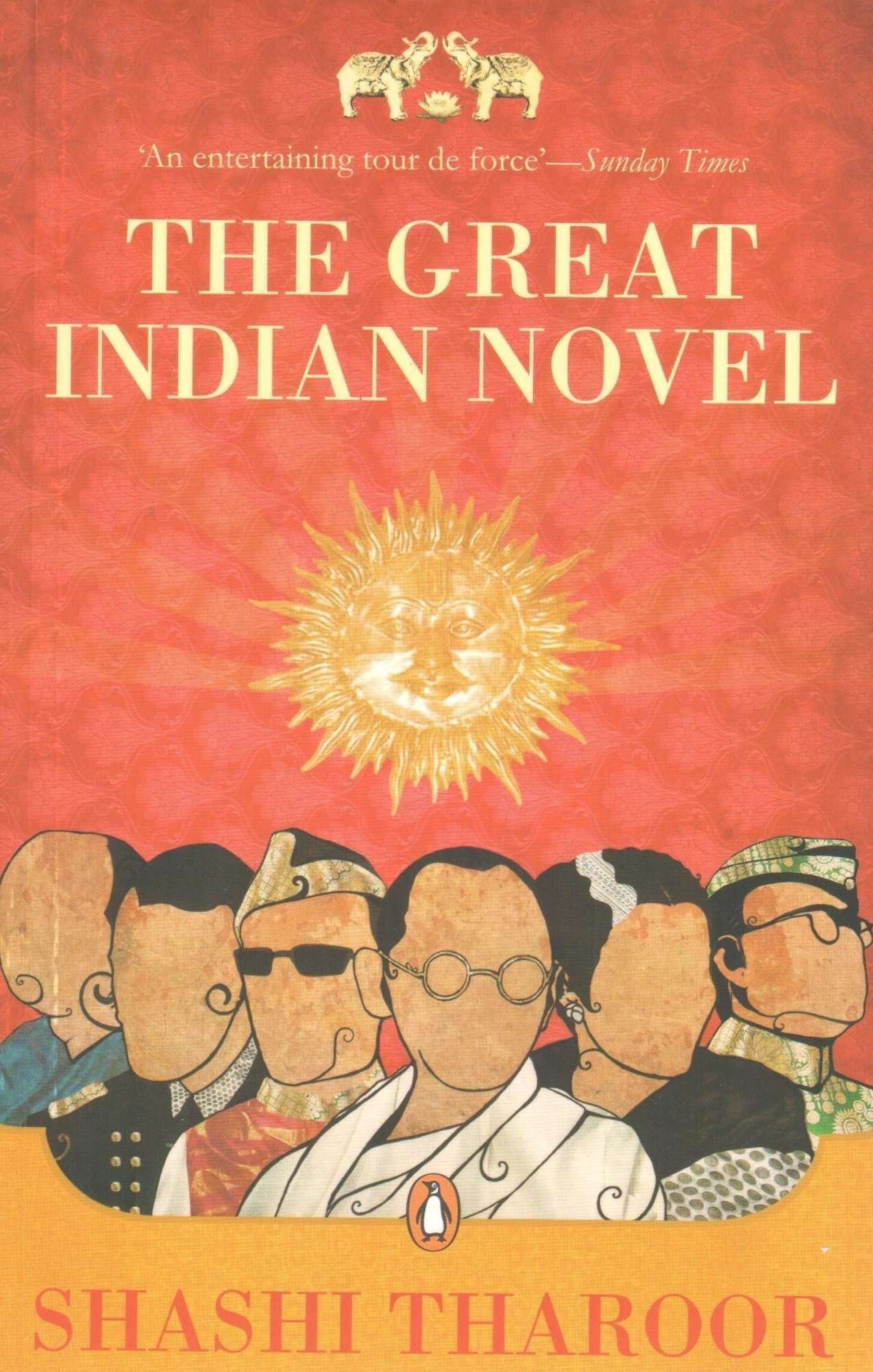
The Great Indian Novel by Shashi Tharoor is a bold and witty satirical novel that reimagines India’s struggle for independence and its post-independence political history through the framework of the ancient Indian epic, the Mahabharata.
The novel cleverly maps historical figures from India’s freedom movement and political landscape onto characters from the epic. For example, leaders of the independence struggle and early Indian politics are represented as reinterpreted versions of mythological heroes and villains. This blending of myth and history allows Tharoor to comment on corruption, democracy, power struggles, and the complexities of nation-building.
The story is narrated in a reflective, almost mock-epic tone, where the narrator looks back at India’s journey from colonial rule to independence and beyond, questioning how ideals of freedom and morality evolve over time. Through satire, irony, and literary parody, the book exposes contradictions in Indian politics while also celebrating the resilience of its democratic spirit.
A major strength of the novel is its intellectual playfulness—it constantly shifts between mythology and modern history, forcing readers to see familiar political events in a completely new light. It is not just a retelling of history, but a critique of how history itself is written and remembered.
Overall, The Great Indian Novel is considered one of the most important works of Indian political satire in English, combining storytelling, history, and mythology into a sharp commentary on the Indian nation.



Reviews
There are no reviews yet.